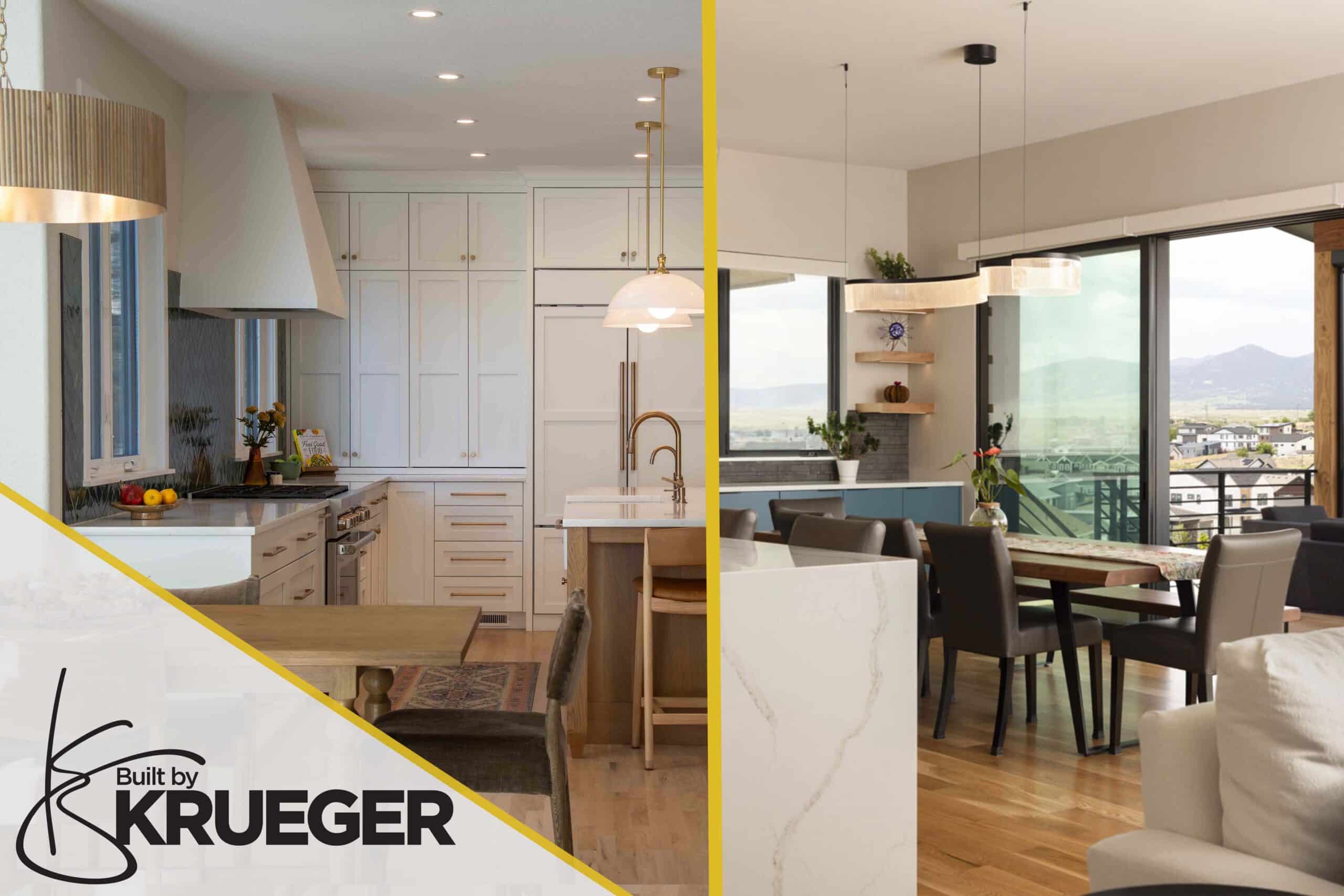
A look into the different kitchen layouts that Built By Krueger built and how different configurations can support the way your family lives.
Popular Kitchen Layouts We Build
- L Shape
- U Shape
- Island Kitchens
- Open Plan Kitchens
Why Kitchen Layout Matters
How the Kitchen is laid out is the foundation of any successful remodel. Before finishes, appliances, or fixtures are ever selected, the layout determines how the kitchen functions on a daily basis. It controls how people move through the space, how work areas relate to one another, and whether the kitchen feels calm or constantly crowded.
A well planned layout improves efficiency and flow, especially during busy times. It reduces congestion when more than one person is cooking, gathering, or passing through the space. Just as important, it helps avoid changes once construction is underway, which are often the most expensive and frustrating part of a remodel.
In our experience, most homeowners underestimate how much the layout affects their long term enjoyment of the kitchen. Materials can be changed over time, but a poorly planned layout is something you live with every day.
Popular Kitchen Layouts We Build
Below are the most common kitchen layouts we’ve built and where each one works best.
Galley/Butler Kitchens
Galley and butler kitchens feature two parallel runs of cabinetry with a walkway between them. This layout is one of the most efficient kitchen configurations because everything is within reach and movement is straightforward. In smaller homes, galley kitchens maximize function without wasting space. In larger homes, this same layout often shows up as a scullery or butler kitchen that supports the main kitchen during everyday use or larger gatherings.
We often recommend this layout when structural changes are limited or when efficiency matters more than openness. When designed well, galley kitchens feel purposeful rather than tight.
Best for:
- Smaller homes or a high efficiency scullery in a medium or larger home
- Remodels where walls cannot be moved
- Homeowners who cook frequently and value efficiency
Design considerations:
- Adequate aisle width for comfort and safety
- Balanced storage on both sides
- Strong task lighting to avoid shadows
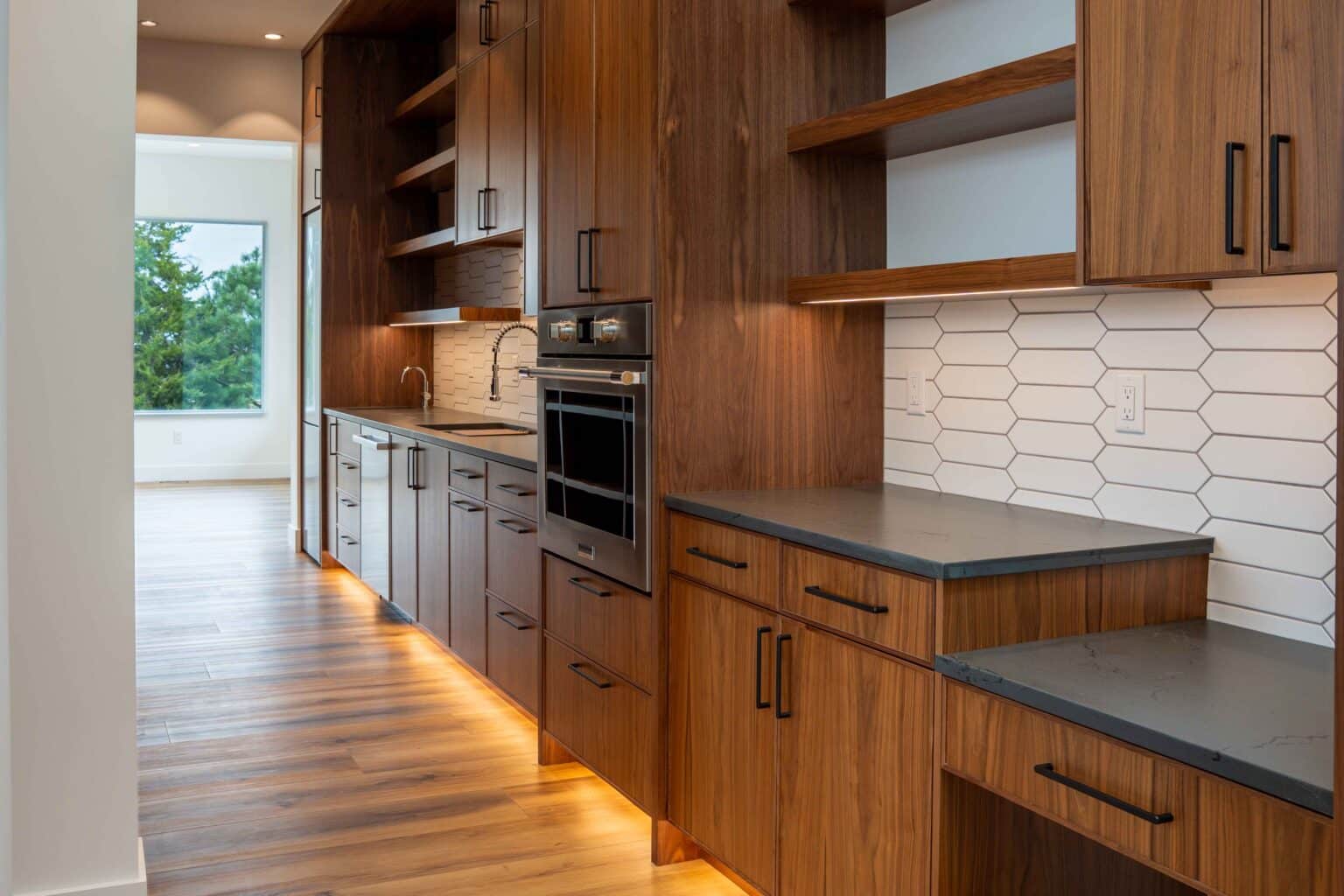
L Shape Kitchens
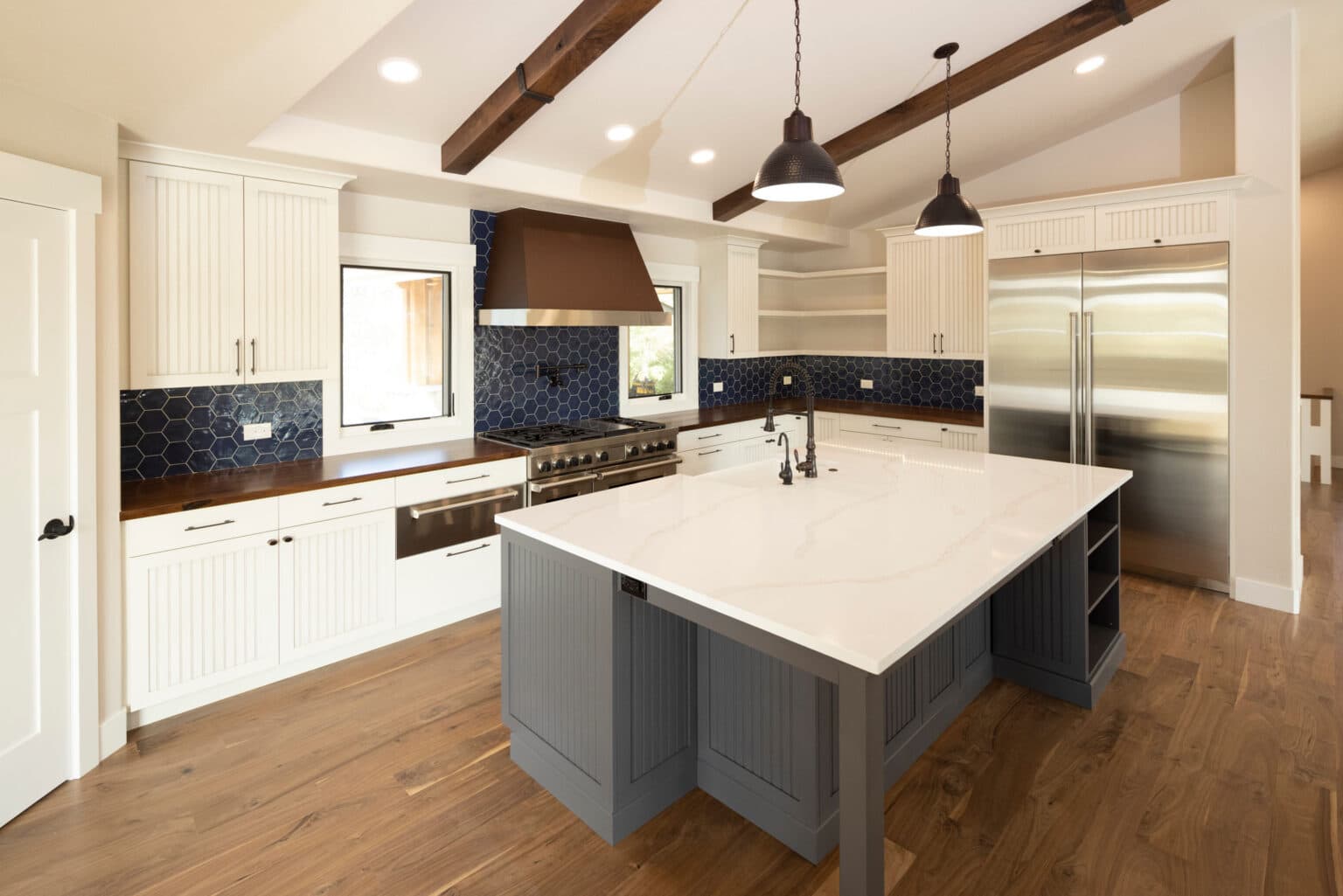
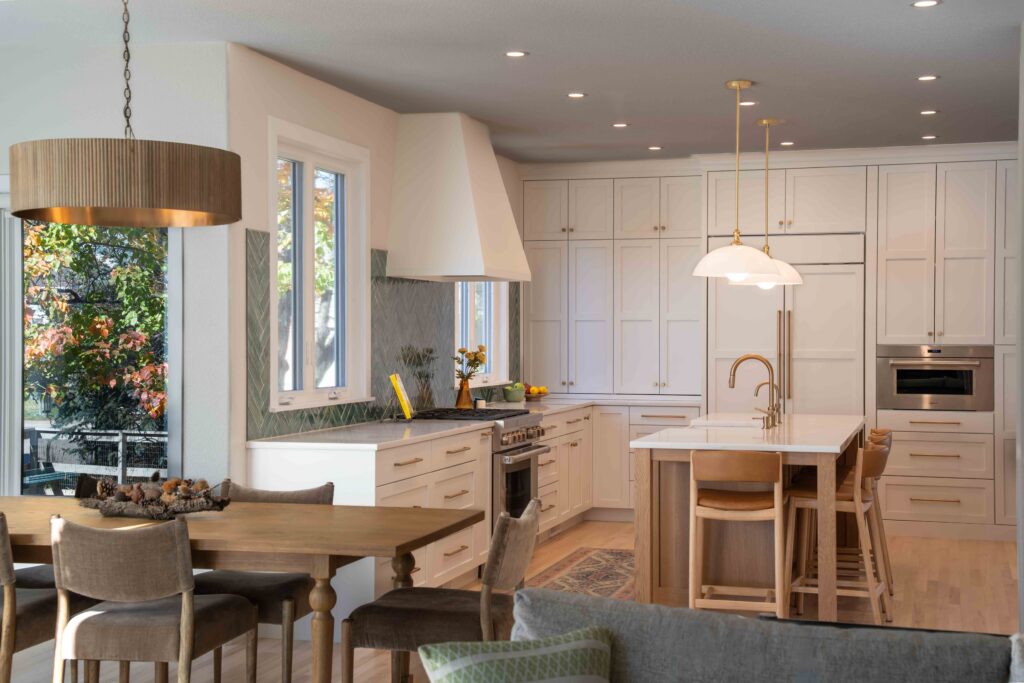
L shape kitchens are named as such because the layout forms the letter ‘L’. This kitchen uses two adjoining walls and leave the rest of the space open. This design is versatile, making it ideal for both small spaces that fit against two walls or a larger open-concept home where it can create distinct zones of the kitchen to dining to living spaces. It’s efficient because the sink stove and refrigerator are within easy reach of each other. We’ve seen opening up spaces becoming more popular lately.
Best for:
- Open living areas
- Medium sized homes
- Flexible furniture and island options
Design considerations:
- Corner cabinet solutions
- Clear work zones
- Opportunities for natural light
U Shape Kitchens
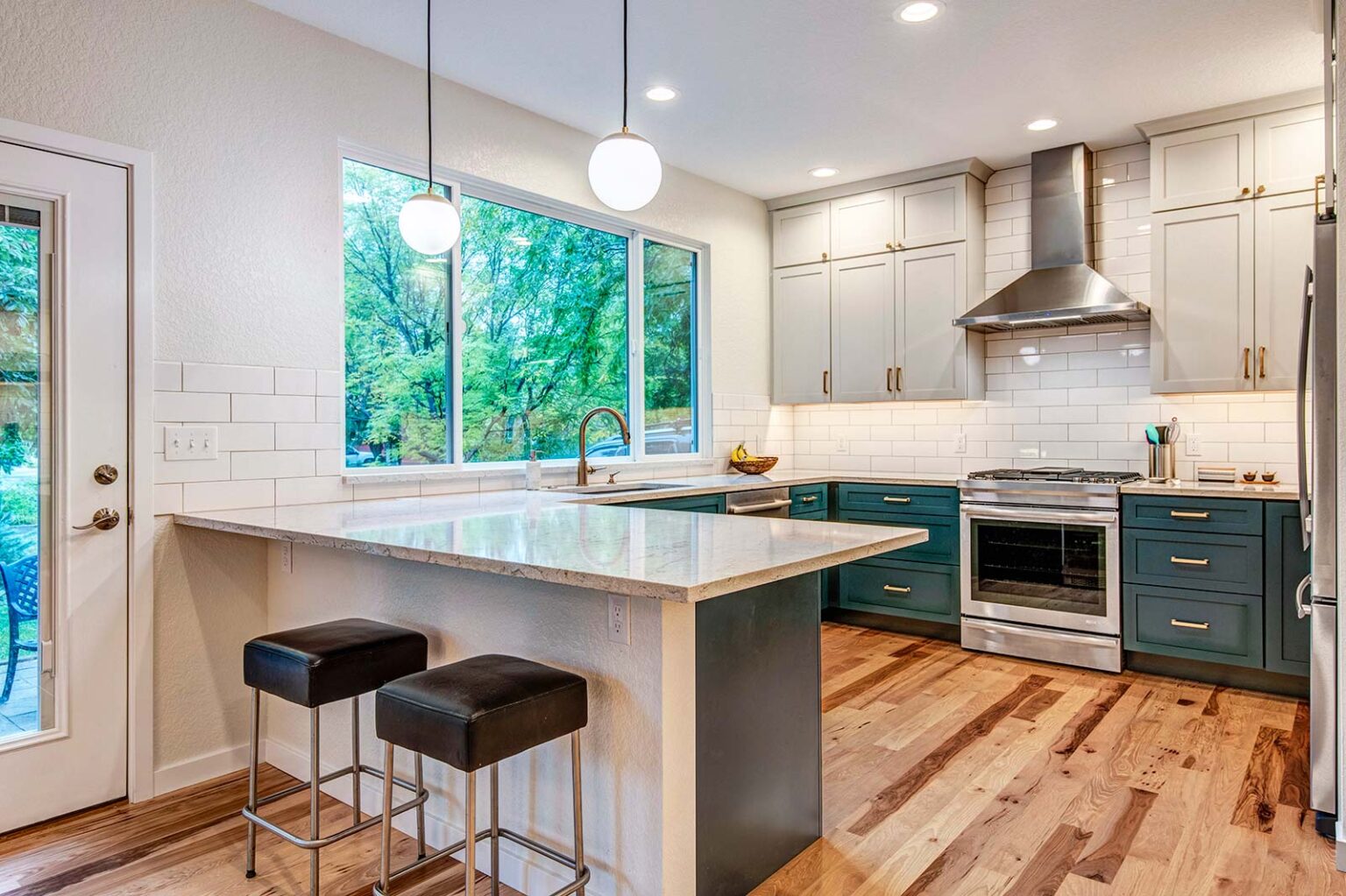
U shape kitchens wrap cabinetry around three sides, creating a dedicated and highly efficient workspace. This layout keeps cooking zones close together and offers generous counter space and storage. It is a classic layout for a reason, especially for homeowners who spend a lot of time cooking.
The key to a successful U shape kitchen is proportion. Without careful planning, these kitchens can feel enclosed, especially in older homes.
Best for:
- Serious home cooks
- Homes with adequate square footage
- Kitchens that need maximum storage
Design considerations:
- Avoiding tight aisle spacing
- Balancing upper and lower cabinets
- Integrating windows or openings
U shape kitchens excel at efficiency but require careful planning to avoid feeling enclosed.
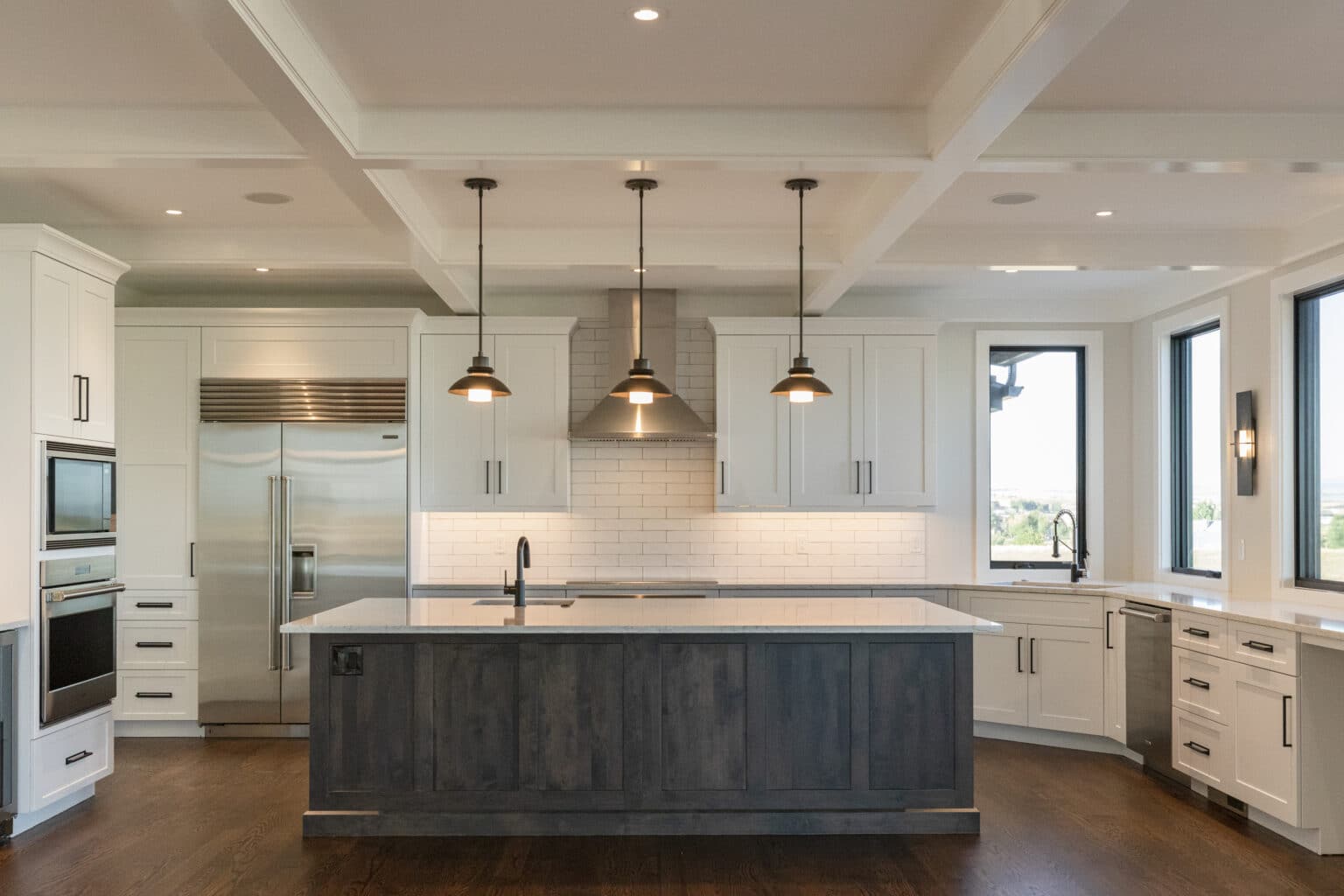
Island Kitchens
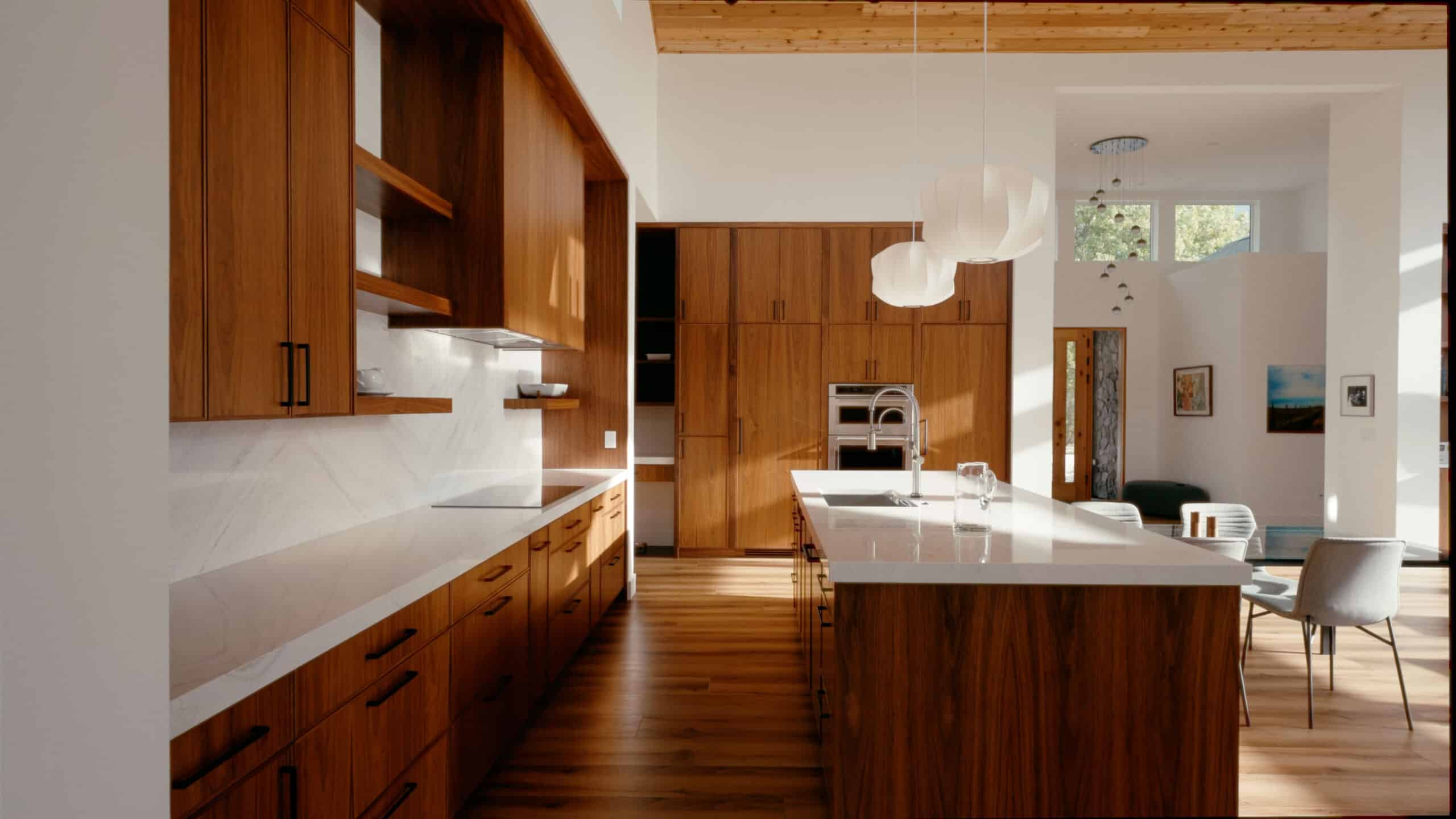
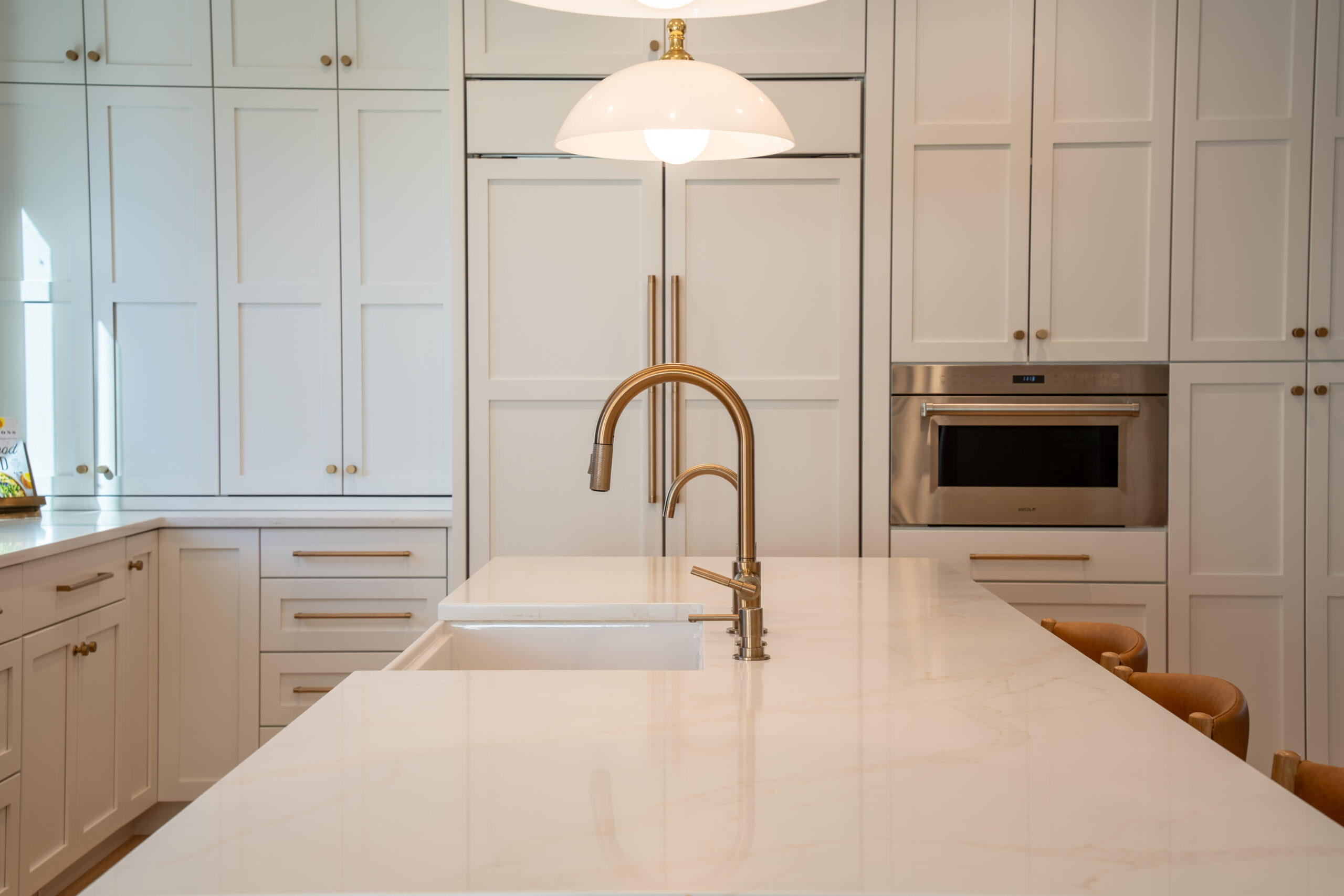
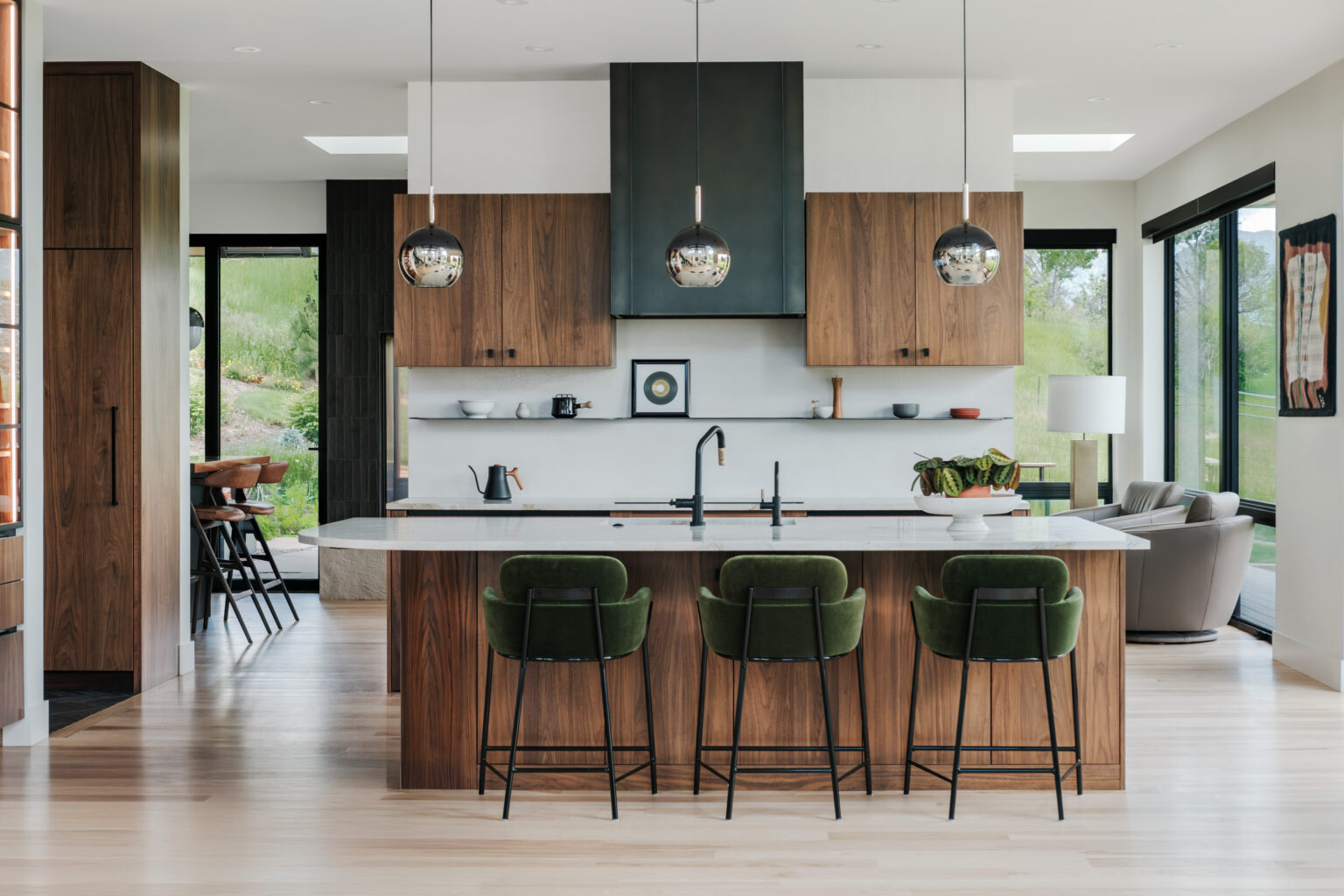
Island kitchens incorporate a central workspace that anchors the room and naturally draws people together. This layout works well in homes where the kitchen is a social and cooking space. Islands often serve multiple purposes, including prep space, seating, homework zones, and casual gathering locations.
An island should earn its place. When sized and positioned correctly, it becomes the heart of the home. In larger kitchens, some homeowners pair an island kitchen with a scullery to support hosting and keep the main space feeling calm during busy days.
Best for:
- Families who gather in the kitchen
- Homes with open floor plans
- Multi use kitchens for cooking, seating, and homework
Design considerations:
- Clearances around all sides
- Seating versus prep balance
- Power, lighting, and plumbing coordination
An island should earn its place. When sized correctly, it becomes the heart of the home. Some folks with this style of kitchen have a scullery to balance for larger hosting days.
One of our Boulder kitchens featuring this layout was recognized in Best of Houzz Magazine as one of the ten most popular new kitchens, highlighting how a well designed island can define an entire home. https://www.houzz.com/magazine/the-10-most-popular-new-kitchens-right-now-stsetivw-vs~183291549
Open Plan Kitchens
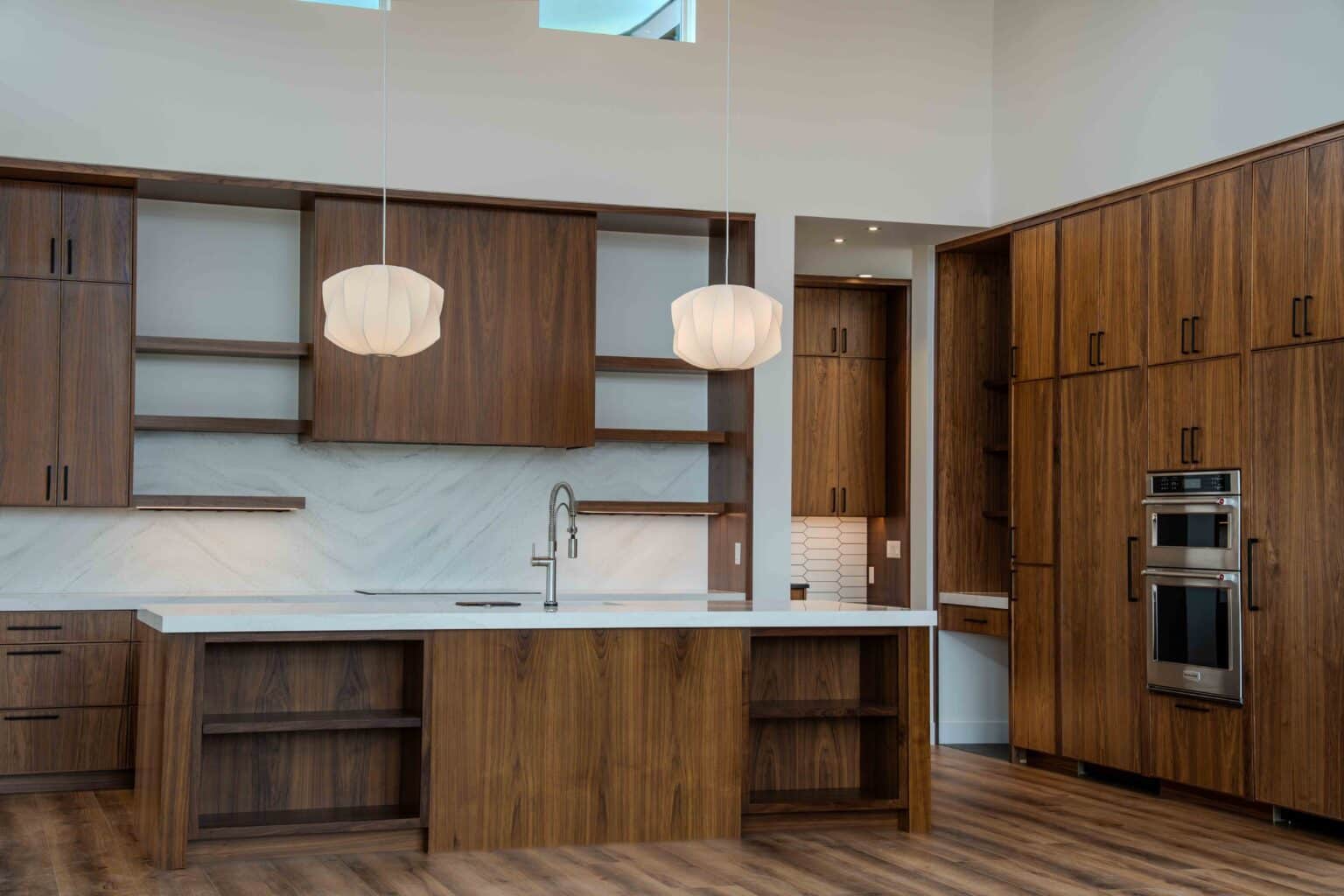
Open plan kitchens connect directly to dining and living areas, creating a shared space rather than a closed room. This layout supports connection and visibility, which many families value, especially when entertaining or managing busy households.
Open plans require restraint. Without thoughtful design, they can quickly feel cluttered or noisy. When done well, they create a seamless transition between spaces while still allowing the kitchen to function properly.
Best for:
- Entertaining focused households
- Families who want visual connection between spaces
- Homes with shared living zones
Design considerations:
- Managing sightlines
- Controlling noise and cooking smells
- Consistent materials across spaces
Open plans work best when the layout, materials, and storage are carefully coordinated from the start.
Sculleries
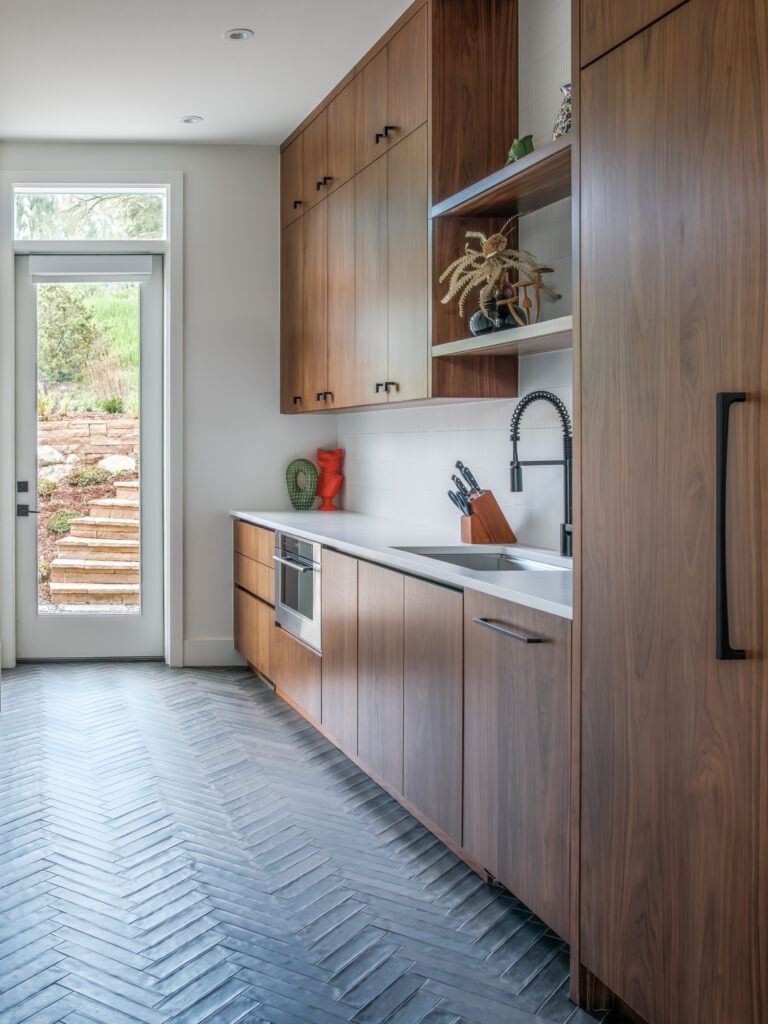
A scullery is a secondary kitchen or room, often hidden, used for messy tasks like washing dishes, food prep, and storage, keeping the main kitchen clean and uncluttered, especially for entertaining. Historically in large homes, it was a utilitarian space for servants, but today it functions as a “back kitchen” with sinks, extra appliances (dishwasher, fridge, etc.), and cabinets for overflow storage, popular in modern open-concept designs for keeping chaos out of sight.
Best for:
- Larger homes
- Homeowners who entertain frequently
- Kitchens that need to stay visually clean
Design considerations:
- Proximity to the main kitchen
- Ventilation and plumbing needs
- Allow Adequate storage and counter space
Sculleries allow the main kitchen to remain calm and organized, even during large gatherings.
How flows change based on family lifestyle
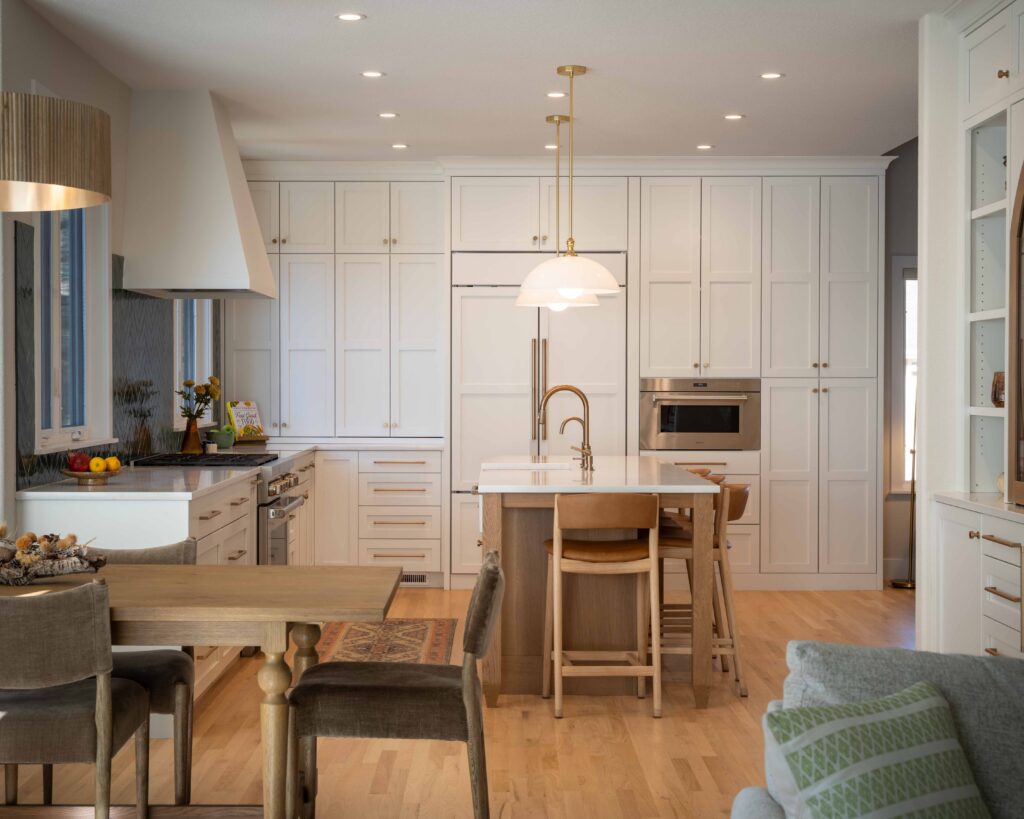
We will use the first example of an L-shape kitchen we recently finished. These clients requested a whole first floor remodel. This included moving some walls, updating flooring, cabinetry, and putting together a new space to fit their new lifestyle. They had older kids that were leaving the house and wanted their home to be a functional hosting space.
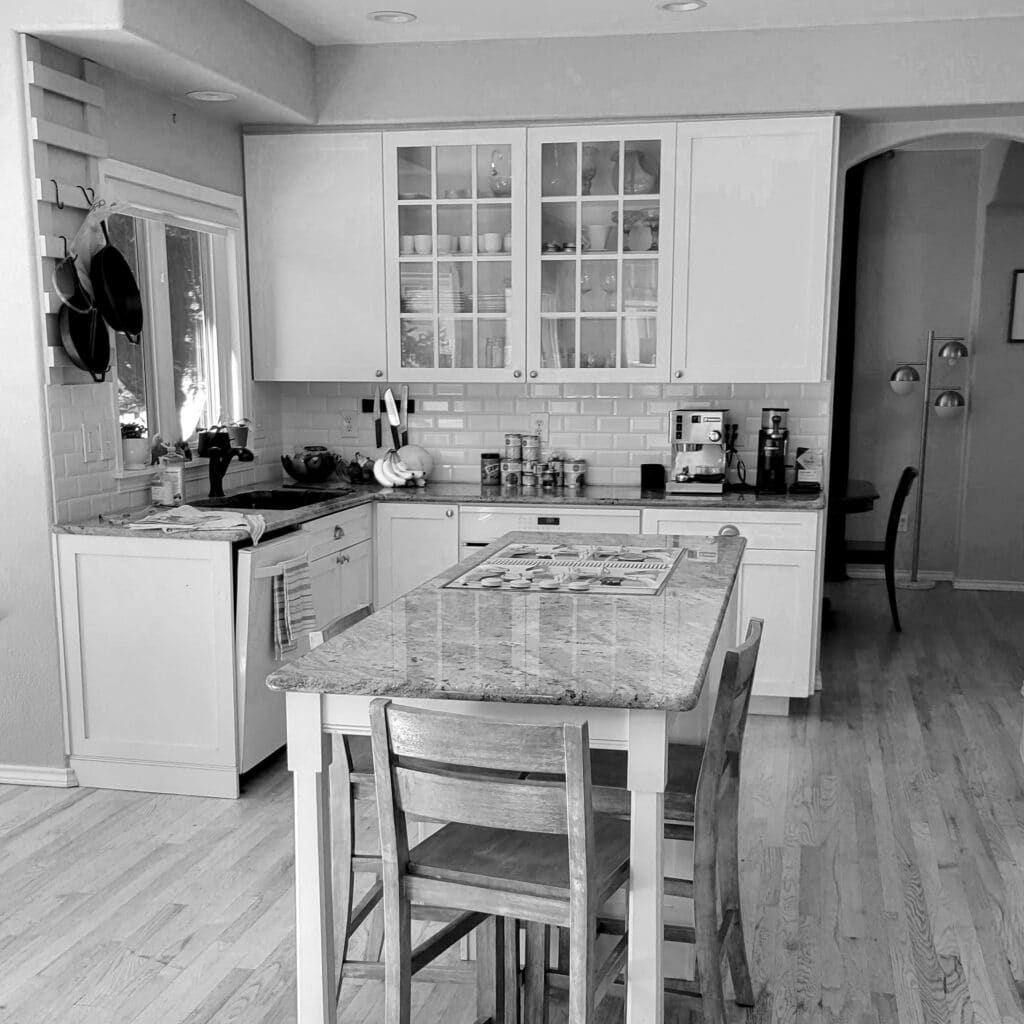
This first photo is what existed before with this project. This older design hides the dining room into a separate enclosed space and has a small L-shape kitchen with a gas burner in the center of the island.
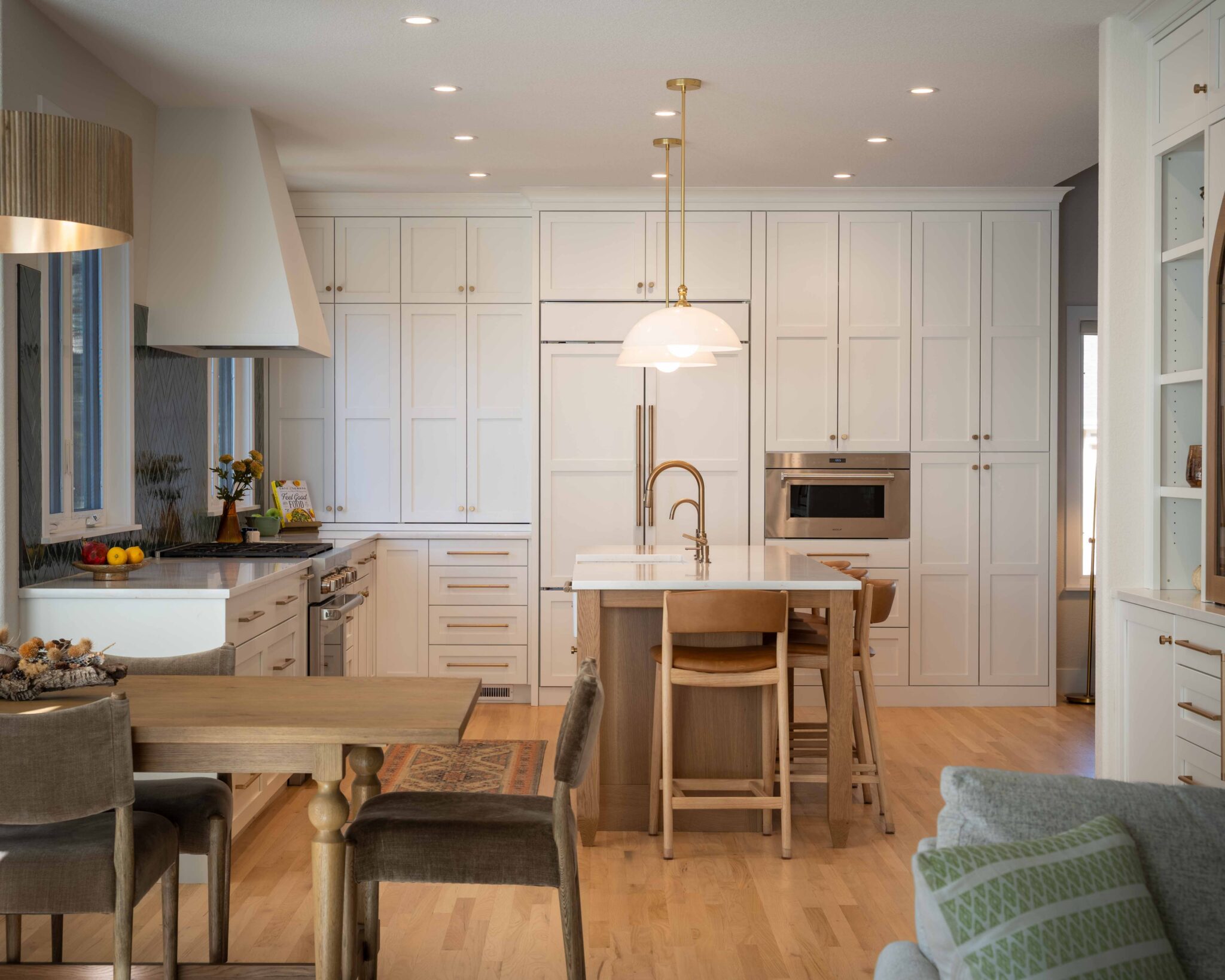
Here is how the kitchen of this project turned out after we finished. A beautiful cabinet package with refinished floors, new materials, backsplash, larger and more functional island and countertops. We moved a wall and it makes the kitchen, dining, and living room all flow into each with with more space in the kitchen without risk of being crowded.
While this is just one of many examples it’s important to think about how no single kitchen layout works for every household. Your Lifestyle should always drive layout decisions. While trends or photos can be a great jumping off point, how you live is the most important aspect.
When we help homeowners choose a layout, we focus on how the kitchen is actually used. We look at how many people are in the space at once, how often cooking happens, and whether the kitchen is primarily a workspace, a gathering space, or both. We also consider entertaining habits, the presence of kids or pets, and whether the home supports multigenerational living. Seating needs, storage demands, and work zones all play a role.
The best kitchen layouts reflect daily routines. A daily routine that makes your life easier or more fulfilling is important.
Structural changes
Many kitchen remodels require structural changes in order to achieve the right layout. Walls may need to be removed or relocated, beams or posts added for support, and mechanical systems such as plumbing, electrical, and HVAC rerouted to accommodate the new design. In some cases, ceiling heights are adjusted or soffits are modified to improve proportions, lighting, or overall flow.
These changes have a direct impact on cost, schedule, and permitting. Structural work often involves engineering, inspections, and coordination between multiple trades, which is why it is critical to address these decisions early in the process. When structural changes are identified and planned for upfront, budgets are more accurate, timelines are clearer, and delays during construction are minimized.
From a builder’s perspective, early planning around structure is one of the most important factors in delivering a smooth remodel and avoiding surprises once work begins.
Can You Live Through a Kitchen Remodel in Your Home?
Living through a kitchen renovation is never easy, but with Built By Krueger, it’s a seamless and manageable experience thanks to our comprehensive and structured process. From the moment you share your initial ideas with our team to when we do the walkthrough of your home, our team is with you every step of the way, ensuring clear communication and minimal disruption to your daily life.
We handle everything from detailed planning, working with a designer of your choice to obtaining necessary permits and managing construction while providing a weekly schedule and regular updates to keep you informed. Our professional team’s dedication to efficiency and excellence means you can continue living comfortably in your home while we transform your kitchen into a beautiful, functional space.
Kitchen Remodeling with Built By Krueger in Lafayette, Colorado.
If you’re ready to bring your living room remodeling dreams to life, contact us today for a consultation. Let our professional team guide you through the process, ensuring a seamless and successful transformation. Together, we can create a living room that you will love for years to come.
Get in Touch
Fill in the form. Someone on our team will get back to you within 24 hours.