On Podcast Episode #7 of Built By Insights Podcast, host Matt Krueger sat down with Enrico Bonilauri, co-founder of Emu Passive, to unpack the big questions:
What exactly is a Passive House? Why does it feel so much more comfortable and efficient than a standard home? And why would I want a Passive House?
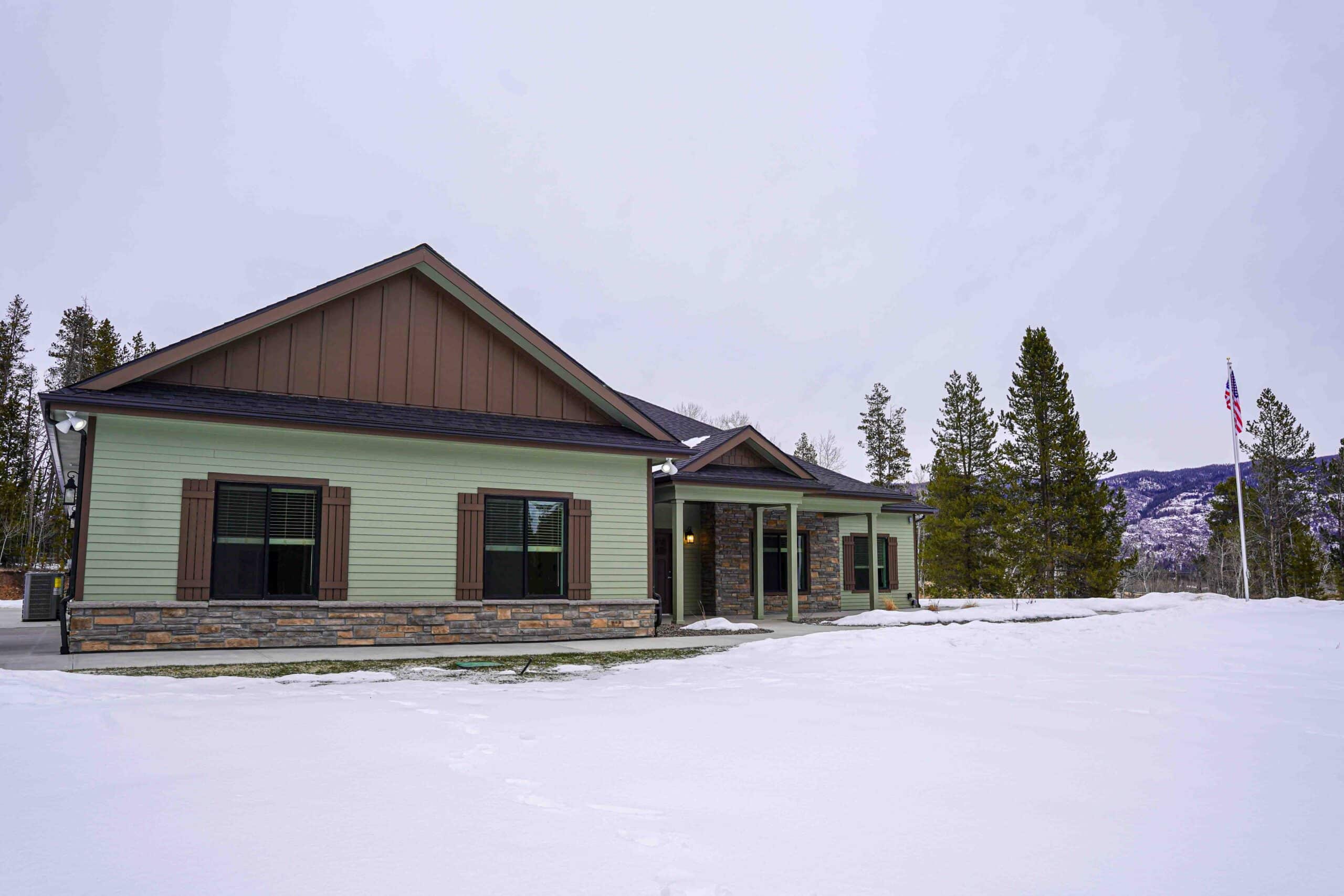
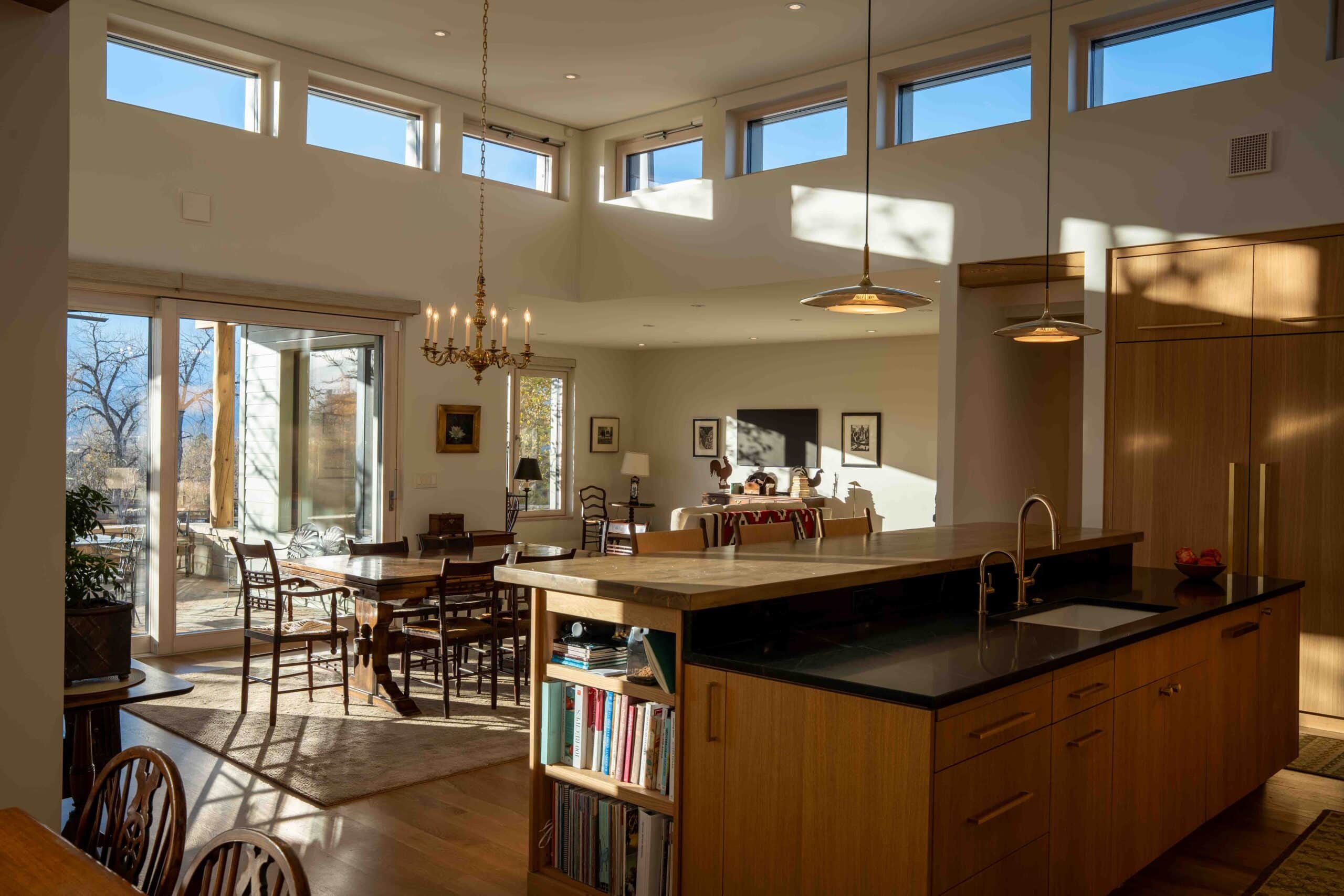
Built By Krueger recently completed a Passive‑Adjacent Home in Boulder in collaboration with Emu Passive, applying many of the same principles used in full Passive House construction. This episode dives into what we learned, what homeowners should know, and why comfort and efficiency are needed to build better. this is Passive House Explained
The Simplest Way to Explain Passive House
"The simplest way to think about this is a Yeti Cooler. Think of your drinks that stay cool if they're inside the cooler [...] because the environment is constant inside the cooler, the cooler is well insulated all around and that's the first principle of Passive House. That is that you have good insulation on your walls, and your floors, and your ceiling. And how much insulation depends on your climate."
Enrico Bonilauri
When asked how to explain Passive House in the simplest possible way, Enrico offers the perfect analogy:
“A Passive House is like living inside a giant Yeti cooler.
Inside a cooler:
The temperature stays stable
Everything stays comfortable
The environment is controlled
That’s the foundation of Passive House: wrapping your home in good continuous insulation. The walls, floors, and ceiling. How much insulation varies by climate, but the concept stays the same: your home is wearing a wool sweater.
The Five Core Principles of Passive House
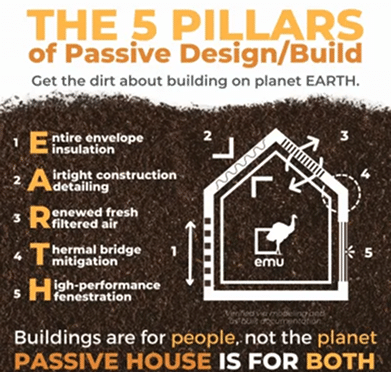
Image source: EmuPassive.com
Enrico breaks down the international Passive House standard into five core ideas:
1. High Levels of Insulation
Insulation is the “wool sweater” that stabilizes interior temperatures.
- It reduces heat loss in winter and heat gain in summer
- It minimizes room‑to‑room temperature swings
- It lowers energy demand without sacrificing comfort
The exact R‑values depend on your climate zone but the strategy stays the same: insulate everywhere, and insulate well.
2. No Thermal Bridging
A thermal bridge is like a rip in the sweater.
It’s any point where heat or cold travels around your insulation. This can be steel beams, rim joists, or uninsulated structural connections.
Eliminating thermal bridges:
- Increases comfort
- Prevents cold surfaces (which can cause condensation)
- Lowers heating & cooling loads
Passive House design removes these weak points through careful detailing and material choices.
3. Airtight Construction
Drafts make your home uncomfortable and pull in smoke, pollen, dust, and outdoor pollution. Airtightness prevents that. You control your home’s air, rather than the outdoors controlling it for you.
4. High-Performance Windows & Doors
Windows are always the weakest part of a home’s thermal envelope.
In Colorado’s Climate Zone 5, triple‑pane glazing is typically the best choice. In warmer climates, performance double-pane can be enough.
Passive House simply uses building science to match the right product to the climate.
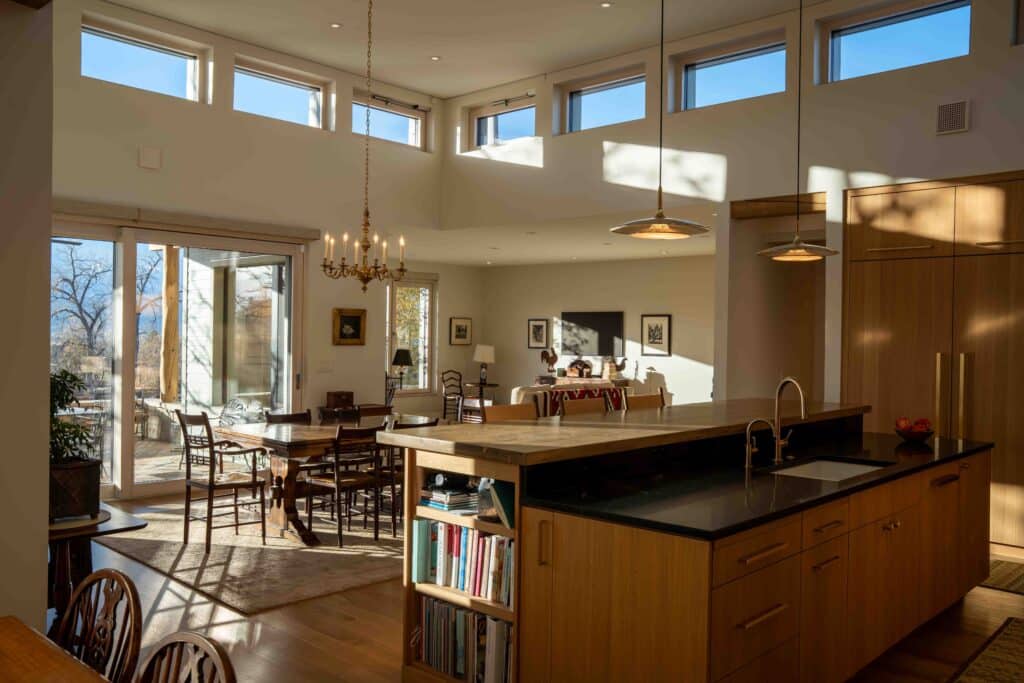
Above:
Passive Adjacent Home in Boulder with Zola windows
5. Continous Filtered Fresh Air (HRV/ERV)
Airtight homes need intentional ventilation—and Passive House uses two highly engineered systems:
- HRV (Heat Recovery Ventilator)
- ERV (Energy Recovery Ventilator)
These systems provide:
- clean, filtered outdoor air
- stable indoor humidity
- no energy penalty for ventilation
They filter out:
- smoke
- dust
- allergens
- radon
- cooking particulates
This helps your home stay clean, and keeps it so you have a healthier indoor environment even on bad air pollution days.
"So Why Would My Wife Want to Live in a Passive House?"
Matt brings up a question many couples ask.
Enrico’s answer is simple:
Because a Passive House is healthier, quieter, more comfortable, and more consistent than any code-built or Energy Star home.
Most people don’t realize how poor their indoor air quality is until they experience clean, filtered, balanced air.
With Passive principles, families enjoy:
- better sleep from stable temperatures
- fewer allergies
- no drafts
- reduced exposure to pollutants
- radon control
- quieter interiors
- energy savings
And in Colorado’s dry climate, ERVs help maintain better indoor humidity. Leaky homes constantly lose moisture, tight homes keep the humidity levels where you want it.
Prioritizing Passive House Elements on a Budget
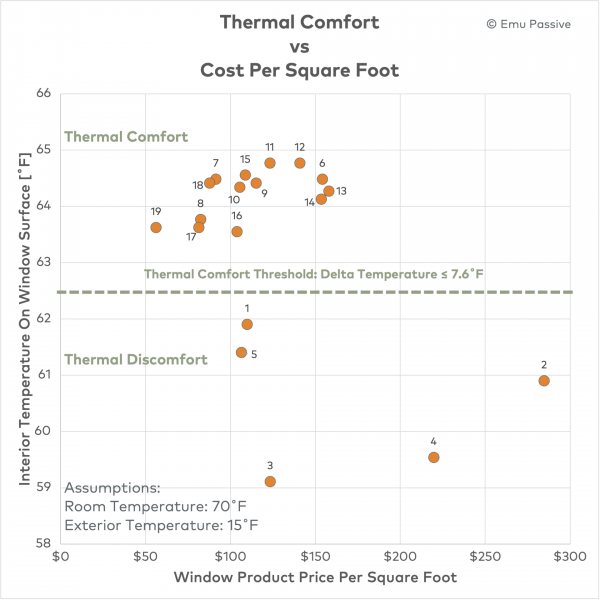
Image source: EmuPassive.com
Not every project can hit the full Passive House certification. That’s okay.
Enrico recommends prioritizing in this order:
1. Air sealing + ventilation – Huge impact on comfort, health, and durability.
2. High-quality windows & doors – Major boost in thermal comfort.
3. Insulation upgrades – Energy efficiency improves, but the comfort impact is slightly lower.
He also warns:
High-end window brands ≠ high performance.
Many premium options still fail Passive House comfort requirements.
The Truth About Spray Foam Insulation
Spray foam often delivers half its advertised R-value in real-world conditions.
Foam can shrink or crack over time, creating air leaks.
Long-term airtightness is rarely guaranteed with spray foam alone.
Relying on spray foam for airtightness is risky and can undermine long-term performance. So when testing homes we need to be aware of the loss of insulation performance compared to the advertising of spray foam.
The Real Reason Passive Homes Feel Better
Passive House is a high energy standard but it’s not all about conserving energy.
It’s a comfort standard.
A health standard.
A durability standard.
The benefits include:
- consistent, even temperatures
- dramatically better indoor air quality
- resilience to wildfire smoke, heat waves, and cold snaps
- quieter interiors
- reduced allergens
- lower energy bills
- long-term durability and moisture control
Simply put:
Passive House is the science of making homes that feel amazing to live in.